Guides
How the Tote Pool and Fixed Odds Really Differ
Every race in Australia can be backed two ways: into a pool that is shared out after the race, or at a price locked in when the bet is placed. We read the betting rules and legislation that govern both, then worked through the arithmetic of a tote dividend so the difference between the two is visible in dollars rather than in slogans.
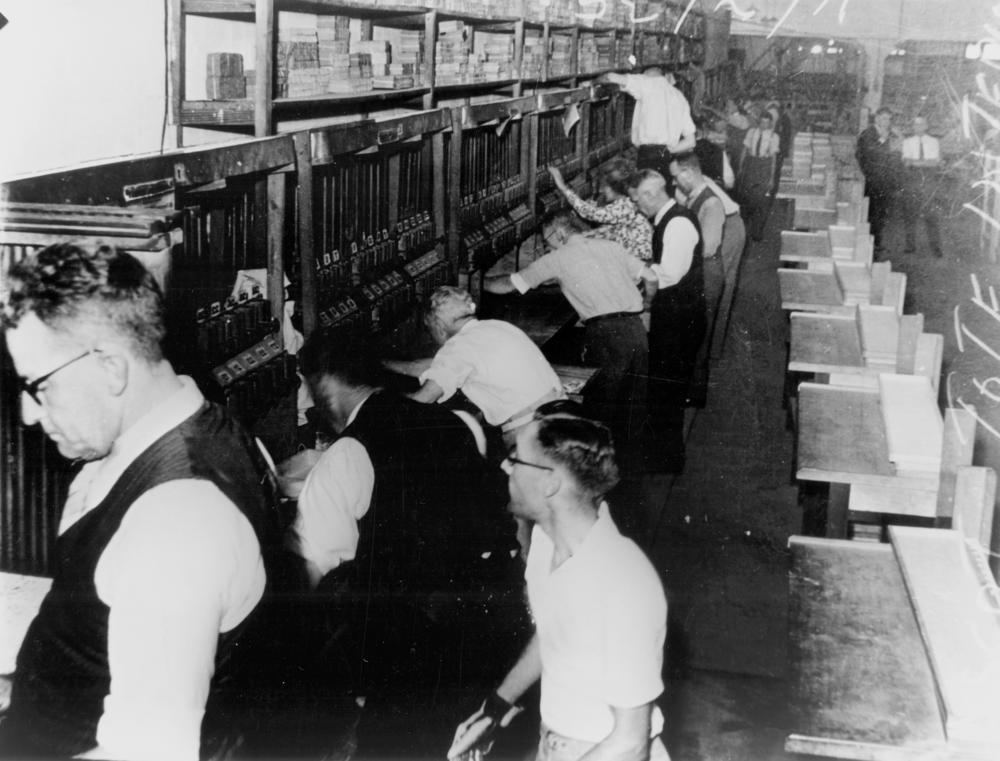
Inside the totalisator at Ascot racecourse, Brisbane, February 1939. Photo: Sunday Truth (Brisbane, Qld.), Public domain
On this page 7 sections
The pool: what a totalisator actually is
Queensland's Wagering Act 1998 gives a plain legal description. Section 8 defines a totalisator as a system that lets people invest on an event "with a view to successfully predicting" an outcome, and that enables "the totalisator pool to be divided and distributed" among those who got it right. The same section says the pool is what is left after allowing for refunds, deducting commission, and adding any pool top-up.
That definition holds the whole idea. Nobody at the tote is laying odds against you. Punters are betting against each other, and the operator takes a fee for running the pool. The dividend you collect is simply the net pool divided by the money that sits on the winner.
How much comes out before the pool is shared
Commission is set by each state's rules, and the ceilings are published. The Tasmanian Betting Rules for UBET TAS say the licence holder may deduct "an amount not exceeding 25%" of the total invested in a totalisator, and up to 35% for international pooled bet totalisators. Those are caps, not the rate on every pool.
Actual rates by bet type appear in other official documents. A New Zealand Gazette notice, the Betting Rules Amendment Notice (No.1) 2023 published on 17 January 2023, lists the Tabcorp deductions that apply to merged pools with commingling partners: Win 14.5%, Place 14.25%, Quinella 17.5%, Trifecta 20%, First4 22.5% and Quaddie 20%. The pattern is the useful part. The more exotic the bet, the larger the slice taken before any winner is paid.
Worked example: one win pool, two moments
The figures below are our own illustration, not a real race. We use the 14.5% win deduction from the gazette notice and the rounding rule in section 164 of the Queensland Act, which says a fraction of 10c under 5c is disregarded and a fraction of 5c or more is taken to be 5c.
- Ten minutes before the jump. The win pool holds $100,000, and $20,000 of it is on runner 4.
- Take out commission. 14.5% of $100,000 is $14,500, leaving a net pool of $85,500.
- Divide by the money on the winner. $85,500 / $20,000 = $4.275 for every $1 unit.
- Round. The fraction of 10c is 7.5c, which is taken to be 5c, so the dividend shown would be $4.25.
- Late money arrives. In the final minute, another $5,000 goes on runner 4 and the pool grows to $105,000. Net pool: $105,000 x 0.855 = $89,775. Divided by $25,000 on runner 4 = $3.591, which rounds to $3.55.
Nothing about the horse changed between those two moments. The dividend fell by 70c because other punters agreed with you. That is the core trade-off of the tote: you do not know your price until betting closes, and the most popular selections are the ones most exposed to a late slide.
Fixed odds and the products built on top of them
Western Australia's Rules of Wagering 2005 define a fixed odds wager as one where the amount won "is determined before the wager is accepted". Once the bet is struck, later money does not move your return. The bookmaker carries the risk instead, which is why fixed prices are shaped by the bookmaker's own margin rather than by a published commission rate.
Several product names that punters see in betting apps have formal definitions in the same WA rules:
- Top fluc wager is a win bet paid at "the highest on-course bookmakers' odds" for that runner.
- Starting price guarantee wager pays the higher of the fixed odds at the time of the bet and the final on-course bookmakers' odds.
- Tote bet wager is a win or place bet where the odds follow the final totalisator price.
Rule 50(2)(h) adds that a tote bet win wager can be settled on either the highest dividend paid by an Australian totalisator or the middle dividend. The rules define an Australian totalisator as one licensed in New South Wales, Victoria or Queensland, and the middle dividend as the middle of three dividends, or the higher of two. Operators sell the highest-of-the-pools version under names such as "Best Tote". The exact basis, including any caps and which races qualify, sits in each operator's own terms, so read them before relying on the label. Rule 50(4) restricts SP guarantee, top fluc and tote bet wagers in WA to telephone and internet betting.
Side by side
How the main ways of backing a horse compare on the points that decide your return.
| Product | When your price is set | What sets it | Main thing to watch |
|---|---|---|---|
| Tote (win or place pool) | After betting closes | Net pool divided by units on the winner | Late money on your runner shrinks the dividend |
| Fixed odds | When the bet is accepted | The bookmaker's quoted price | Bookmaker margin is built into every price |
| Tote bet wager, highest dividend | After the race | Highest of the NSW, Victorian and Queensland dividends | Operator terms may cap or limit it |
| Tote bet wager, middle dividend | After the race | Middle of three dividends, or higher of two | Usually below the highest pool |
| Top fluc | After the race | Highest on-course bookmakers' odds | Win only; availability depends on the operator |
| SP guarantee | At bet time, with a later check | Higher of your fixed odds and final on-course odds | Win only; availability depends on the operator |
When each one tends to pay more
We cannot give you a percentage of races where one product beats the other, because no official source we found publishes one. What the mechanics do tell you is where the pressure points sit.
Cases that lean towards the tote
A runner the betting public overlooks keeps a large share of a pool that is mostly sitting on other horses, so its dividend can drift out. In big, deep pools on major race days, a single large bet moves the price less, which makes the final dividend less of a lottery. Taking the best of several pools also helps, simply because the maximum of three numbers can never be below any one of them.
Cases that lean towards fixed odds
When you expect a runner to be heavily backed late, a fixed price protects you from the slide shown in our worked example. Small pools, such as those on minor meetings, can swing sharply on one bet, and a fixed price removes that uncertainty. Exotic bets are the other consideration: the gazette rates show commission on a First4 is 8 points higher than on a win bet, so the pool you are sharing is thinner before anyone collects.
For a broader primer on reading prices, our explainer on how decimal and fractional odds work covers the conversions, and the guide to how a bet is placed and settled fills in the basics.
If you are comparing approaches over a season, the notes on betting strategy and staking are the next step.
Keep the bet sized to the budget
Victoria's gambling regulator, the VGCCC, warns on its racing page that quinellas, trifectas and multi-race bets "increase potential losses" and advises sticking to "simple bets and a clear budget". Exotics carry the highest commission in the rate table above as well, so the warning and the arithmetic point the same way. If racing has stopped being fun, BetStop, the National Self-Exclusion Register, blocks you from all licensed Australian online and phone wagering providers at no cost, and the free, confidential Gambling Helpline on 1800 858 858 runs 24 hours a day, 7 days a week, alongside chat support at Gambling Help Online. Our safer gambling page lists the state services too.
Sources
- Wagering Act 1998 (Qld), sections 8 and 164 (current as at 28 September 2024)
- UBET TAS Pty Ltd, Tasmanian Betting Rules, rule 7 Commission
- New Zealand Gazette, Betting Rules Amendment Notice (No.1) 2023, Appendix 4 Commingling Statutory Deductions
- Rules of Wagering 2005 (WA), rules 3(1) and 50
- VGCCC, Understanding betting on racing
- BetStop, the National Self-Exclusion Register
Frequently asked questions
Why did my tote dividend drop after I placed the bet?
Because the dividend is the net pool divided by the money on the winner. Every dollar placed on your runner after you bet increases that divisor, so the final dividend falls even though nothing about the horse has changed.
How much commission does the TAB take from a win pool?
A New Zealand Gazette notice published on 17 January 2023 lists Tabcorp's deduction for win pools merged with commingling partners at 14.5%, with higher rates on exotics such as 20% on trifectas. State rules set the legal ceilings, for example 25% under the Tasmanian Betting Rules.
What is a top fluc bet?
Under Western Australia's Rules of Wagering 2005, a top fluc wager is a win bet paid at the highest on-course bookmakers' odds for the runner, as determined by the pricing information body.
Is Best Tote the same as the middle dividend?
No. WA rules allow a tote bet win wager to be settled on either the highest dividend paid by an Australian totalisator or the middle dividend. Best Tote style products pay the highest; the middle dividend is the middle of three or the higher of two.
Read next
 TraditionsTwo-up Rules, Odds and Where the Game Is LegalTwo pennies, a wooden kip and a crowd around a ring. We walk through a spin from the boxer's call to the payout, work out the odds of heads, tails…
 Law & TaxWhy the ACMA Blocks Gambling Websites and What It MeansA blocked gambling page is the end of a legal process that starts with a complaint and ends with a request to internet providers. We explain which…
 Safer GamblingBetStop Self-Exclusion: Coverage, Periods and Exit RulesBetStop shuts every licensed online and phone wagering account in one go, but it does not reach pokies rooms or casinos. We map what the national…
18+Order set by our editors; we earn a commission on sign-ups through partner links — how this works. Decide your budget and session time before you start.