Guides
Division Odds Across Australia's Three Big Draws
Three national lotto draws run every week, on Tuesday, Thursday and Saturday, and each one is built differently: 35 balls plus a Powerball, 47 balls, or 45 balls. We compared the division odds published by Lotterywest, the Western Australian lottery operator, recalculated the top-division figures from the barrels ourselves, and worked out how a System entry multiplies both your games and your cost.
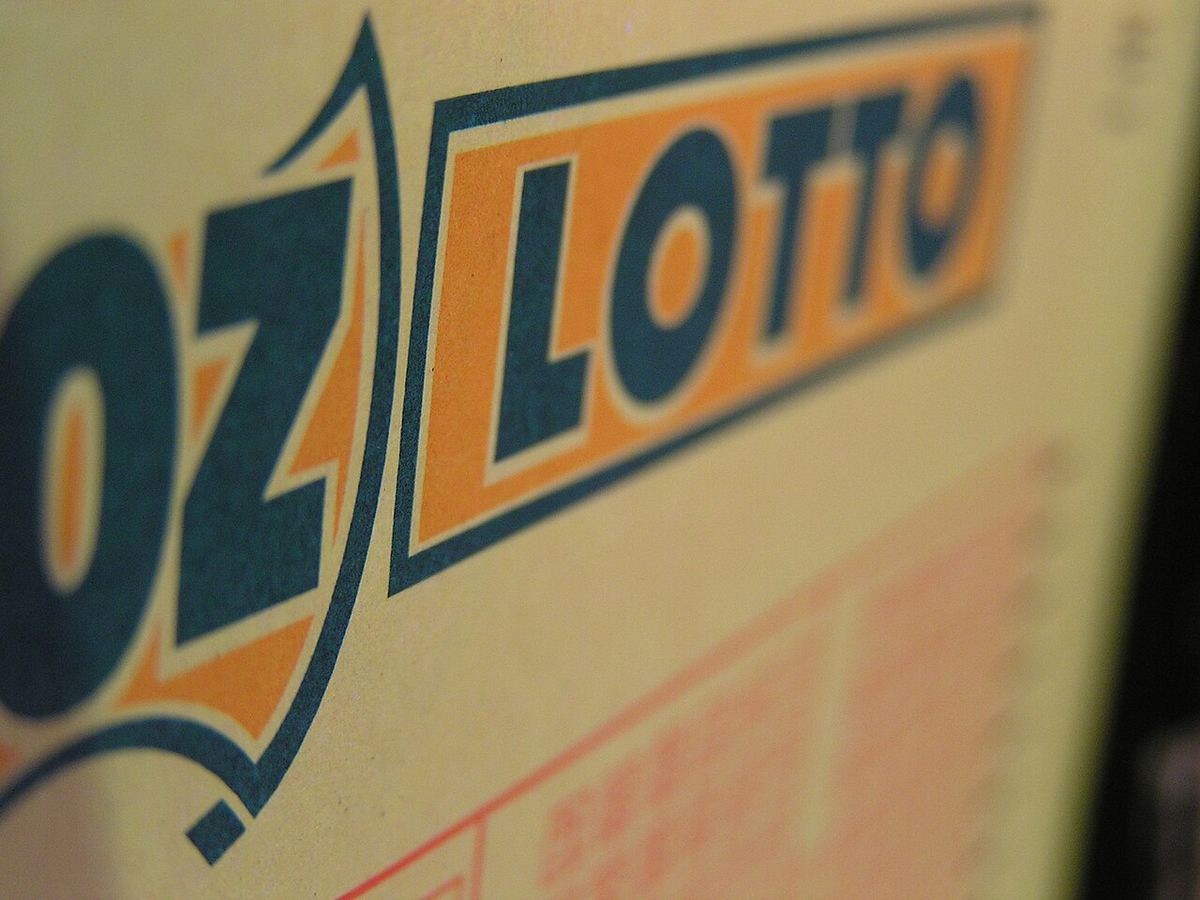
An Oz Lotto entry coupon, photographed in Brisbane in 2005. Photo: Cyron from Brisbane (-27.470963,153.026505), Australia, CC BY 2.0
On this page 6 sections
Three barrels, three structures
The formats come from the game pages Lotterywest publishes for each draw.
- Powerball draws seven winning numbers from 35 in the main barrel, plus one Powerball from a separate barrel of 20. It is drawn on Thursdays and the minimum entry is two games.
- Oz Lotto draws ten numbers from a barrel of 47: the first seven are winning numbers and the last three are supplementary numbers. It is drawn on Tuesdays and the minimum entry is one game.
- Saturday Lotto draws eight numbers from 45: six winning numbers and two supplementaries. The minimum entry is four games.
Division odds side by side
Published odds for one standard game in each draw, as listed by Lotterywest (approximate, as the operator notes).
| Division | Powerball | Oz Lotto | Saturday Lotto |
|---|---|---|---|
| 1 | 7 + PB: 1 in 134,490,400 | 7: 1 in 62,891,499 | 6: 1 in 8,145,060 |
| 2 | 7: 1 in 7,078,443 | 6 + supp: 1 in 2,994,834 | 5 + supp: 1 in 678,755 |
| 3 | 6 + PB: 1 in 686,176 | 6: 1 in 242,825 | 5: 1 in 36,690 |
| 4 | 6: 1 in 36,115 | 5 + supp: 1 in 26,271 | 4: 1 in 733 |
| 5 | 5 + PB: 1 in 16,943 | 5: 1 in 4,497 | 3 + supp: 1 in 298 |
| 6 | 4 + PB: 1 in 1,173 | 4: 1 in 182 | 3: 1 in 53 |
| 7 | 5: 1 in 892 | 3 + supp: 1 in 71 | No division |
| 8 | 3 + PB: 1 in 188 | No division | No division |
| 9 | 2 + PB: 1 in 66 | No division | No division |
| Any prize | 1 in 44 | 1 in 51 | 1 in 42 |
Checking the top line ourselves
Division 1 in each game is a straight count of combinations, so it can be recalculated. C(n, k) means the number of ways to choose k numbers from n.
- Saturday Lotto: C(45, 6) = 8,145,060. One combination in that many wins.
- Oz Lotto: C(47, 7) = 62,891,499.
- Powerball: C(35, 7) = 6,724,520 ways to fill the main barrel, multiplied by 20 possible Powerballs = 134,490,400.
All three match the published figures exactly. The Powerball line explains why its top prize is so much harder to hit than Oz Lotto's, even though Oz Lotto uses a bigger barrel: the second barrel multiplies the combinations by 20. Its Division 2, which ignores the Powerball, is 1 in 7,078,443, closer in difficulty to Saturday Lotto's Division 1.
How a System entry multiplies games
A System entry lets you mark more numbers than a standard game needs. Lotterywest's Ways to play page uses a System 8 in Saturday Lotto as its example: "Your System 8 entry will contain 28 games", one for each six-number combination of your eight numbers. The ticket shows eight numbers, but you hold 28 games.
The general rule is the same combination count:
games in a System n = C(n, k), where k is the numbers in one standard game; cost = games x the price of one standard game
We have not quoted a price per game because Lotterywest publishes prices in a separate price list that changes over time; plug in the current figure.
Worked example: Saturday Lotto System 8
- Games: C(8, 6) = (8 x 7) / (2 x 1) = 28, matching Lotterywest's figure.
- Division 1 chance: 28 / 8,145,060, about 1 in 290,895.
- Cost: 28 times a standard game, so the chance per dollar is exactly the same as buying 28 standard games with no overlap.
- Payout if six of your eight are the winning numbers and the other two are not supplementaries: 1 game holds all six (Division 1); 12 games hold five winners (6 ways to pick five winners x 2 ways to add one of your other numbers), each a Division 3; and 15 games hold four winners (C(6, 4) = 15), each a Division 4. 1 + 12 + 15 = 28.
That last step is what Lotterywest means when it says "a winning entry pays multiple prizes".
The same rule in the other two games
Game counts for common System sizes, from the formula above.
| System | Saturday Lotto, C(n, 6) | Oz Lotto, C(n, 7) | Powerball main numbers, C(n, 7) |
|---|---|---|---|
| 7 | 7 | 1 (standard game) | 1 (standard game) |
| 8 | 28 | 8 | 8 |
| 9 | 84 | 36 | 36 |
| 10 | 210 | 120 | 120 |
Powerball adds a second layer. Each set of seven main numbers can be paired with one Powerball or with all 20. Covering all 20 multiplies the games by 20, so seven main numbers with every Powerball is 1 x 20 = 20 games, and a System 8 with every Powerball is 8 x 20 = 160. Lotterywest notes that a Powerpik ticket is a way to get the winning Powerball number; by the arithmetic, that is what covering all 20 does. Division 1 then depends only on the main barrel: 1 in 6,724,520 for one set of seven.
Why the jackpot grows
Lotterywest calls Powerball and Oz Lotto "jackpotting" games. If nobody wins Division 1, the prize increases in the next draw, and when it is won, the Division 1 pool is shared among all winners in that division. For Oz Lotto, the operator states the Division 1 pool "starts from $4 million".
Saturday Lotto works on a different model in the published material. Lotterywest gives an estimated Division 1 of about $6 million on a regular Saturday, with special Superdraws at $20 million and Megadraws at $30 million or more. Its Saturday Lotto page does not describe a rollover.
Two consequences follow from the sharing rule. A bigger jackpot attracts more entries, so the chance that the prize is split rises with it. And the odds never move: a Powerball game is 1 in 134,490,400 whether the jackpot is at its starting level or many draws in.
Before you buy: a short checklist
- Compare games on Division 1 odds and on any-prize odds; they rank differently.
- Work out a System's game count with C(n, k) and multiply by the current price before you mark the coupon.
- Remember that a System raises your chance and your cost in the same proportion.
- Treat a large jackpot as a bigger prize, not a better chance.
- Set a weekly lottery spend the same way you would for any other gambling.
Lottery odds sit far beyond those of casino games; our comparison of payback across casino games gives a sense of scale, and the keno guide covers the other numbers game sold in Australian venues.
For the legal side of gambling in each state, see our overview of Australian gambling law.
Lotteries feel low-risk because tickets are small, yet System entries can climb into the hundreds of games. If the weekly spend has crept up, the free Gambling Helpline on 1800 858 858 is open 24 hours a day, and our responsible gambling page lists the support available in each state.
Sources
Frequently asked questions
What are the odds of winning Powerball Division 1?
Lotterywest lists Division 1, seven winning numbers plus the Powerball, at 1 in 134,490,400 for one standard game. That is C(35,7) = 6,724,520 multiplied by the 20 possible Powerballs.
Which has better odds, Oz Lotto or Saturday Lotto?
Saturday Lotto. Its Division 1 is 1 in 8,145,060 against 1 in 62,891,499 for Oz Lotto, and its any-prize odds are 1 in 42 against 1 in 51.
How many games are in a System 8?
In Saturday Lotto, 28 games, which is C(8,6). In Oz Lotto and in Powerball's main numbers it is 8 games, which is C(8,7), and a Powerball System 8 covering all 20 Powerballs is 160 games.
Does a bigger jackpot improve my odds?
No. The odds depend only on the barrels. A jackpot that has grown after unwon draws is a bigger prize, and it often attracts more entries, which raises the chance of sharing it.
Read next
 Betting MathsSame-Game Multi Odds: How the Margin CompoundsEach leg of a same-game multi carries its own bookmaker margin, and those margins multiply rather than add. We convert odds to implied probabilities…
 RacingTote vs Fixed Odds in Australian Racing, ExplainedA tote dividend is a share of a pool after commission, while a fixed price is a promise made when the bet is struck. We set the two side by side…
 TraditionsTwo-up Rules, Odds and Where the Game Is LegalTwo pennies, a wooden kip and a crowd around a ring. We walk through a spin from the boxer's call to the payout, work out the odds of heads, tails…
18+Order set by our editors; we earn a commission on sign-ups through partner links — how this works. Decide your budget and session time before you start.